
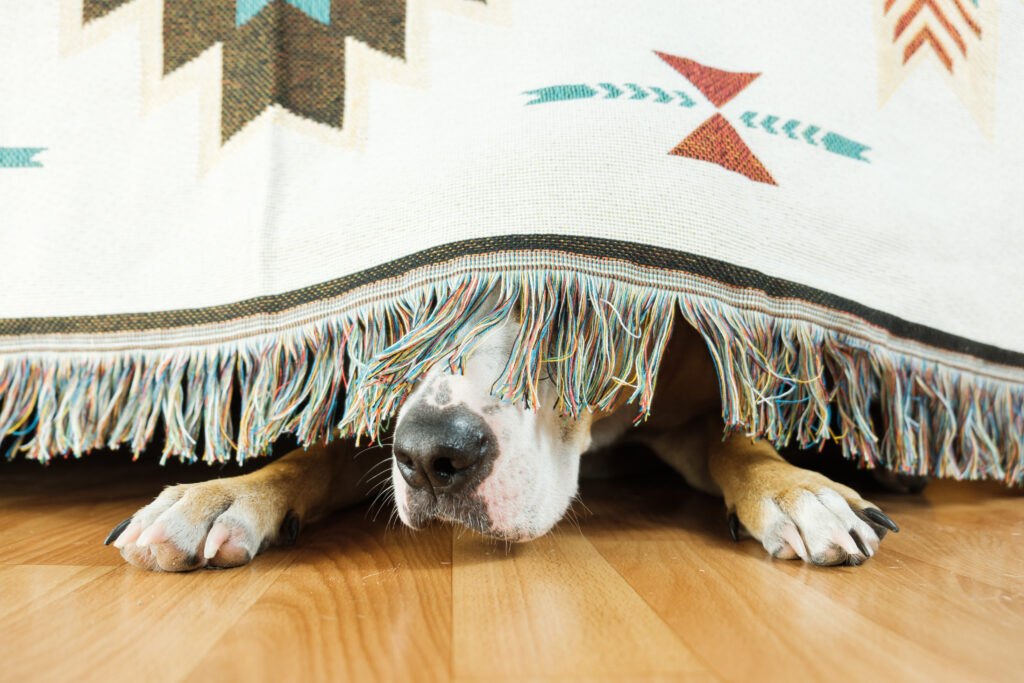
Every year as firework season approaches, we speak to concerned pet caregivers looking for ways to help their dogs cope with the unexpected bangs, flashes and vibrations. This year, we want to share something a little different: an approach inspired by The Bunker Protocol, shared by dog trainer John D. Visconti after working with his own thunder-phobic dog, Pepper. The principle is relatively simple. Rather than waiting until your dog is frightened, create a familiar routine and safe space that they start associating with comfort and positive experiences. It isn’t a guaranteed solution. Many dogs experiencing severe noise phobias will require professional veterinary and behavioural support. However, preparation and gradual desensitisation can help some dogs cope better and give caregivers a greater understanding of their dog’s individual triggers.
Fear or phobia – what’s the difference?
Fear is a normal and important response to something an animal perceives as threatening. Fireworks are loud, unpredictable and unfamiliar, so it’s understandable that some dogs find them frightening.
A phobic response is more extreme and can significantly affect a dog’s ability to cope.
Signs can vary considerably between dogs and may include:
- Trembling, panting or excessive salivation
- Pacing or an inability to settle
- Hiding or trying to escape
- Refusing food or water
- Toileting indoors
- Destructive behaviour, such as scratching doors or digging at carpets
- Refusing to go outside or desperately trying to return home
- Becoming unusually clingy or withdrawing completely
Do not dismiss quieter signs. A dog who freezes or hides may be just as frightened as one who barks, runs or becomes destructive.
Why do some dogs develop noise phobias?
There isn’t always one identifiable cause. Genetics, temperament and previous experiences can all influence how a dog responds to noise. Trigger reactions can also develop or become stronger over time.
What is The Bunker Protocol?
The Bunker Protocol was developed by trainer John D. Visconti while supporting his dog Pepper through her fear of thunderstorms.
It uses principles of positive association with a word and later counter conditioning: pairing something a dog finds frightening with positive and predictable experiences, attempting to change the dog’s emotional response.
For firework season, we can take inspiration from this idea by creating a “bunker” that becomes associated with safety, comfort and good things before fireworks begin. Do this well before you need it.
Creating your dog’s “bunker”
Choose a quiet area of your home where your dog already feels comfortable. This could be a room, a cosy corner or a covered crate with the door left open. The aim isn’t to shut your dog away. They should be able to choose where they feel safest. You can introduce different elements that help make the bunker routine distinctive and familiar to engage every sense.
- Choose your verbal cue
- Feel: If your dog is already comfortable wearing one, a well-fitted wrap or thunder shirt can become part of the routine. The original Bunker Protocol also suggests placing a soft hair scrunchie loosely around the top of the dog’s leg as a distinctive tactile cue. It should never be tight or restrict circulation and should only be used while your dog is supervised, then removed at the end of the session. If your dog shows any discomfort or tries to remove it, don’t use it
- Sound: Add background noise such as calm music (ea. Classic FM’s Pet Classics)
- Sight: Close curtains or blinds
- Taste: Have their favourite food and high-value treats ready
- Smell: prepare a cloth with Pet Remedy or another relaxing smell, such as lavender but not too strong!
- Comfort: Add their usual bed and blankets
Practise before you need it
Never wait for Bonfire Night or fireworks to start to introduce the bunker. On a quiet day, prepare the space as above and invite your dog to join you. Let them see you prepare the environment, put the shirt or wrap on them and say the cue. Reward them for following you. Make the experience calm and enjoyable. Offer treats and gentle affection if your dog likes it or simply sit quietly together.
Keep initial sessions short and repeat them regularly, no more than 10 minutes every few days or so. The aim is for the verbal and environmental cues to predict a familiar, positive experience. Leave the bunker, put everything away and carry on as normal. Rinse and repeat every few days.
When the fireworks begin
Preparation is only part of the picture. Good management on the night matters too. Walk your dog earlier, before fireworks are expected to begin, and keep dogs securely on a lead outdoors. Make sure microchip details and identification information are up to date in case your dog becomes frightened and escapes. At home, close windows and curtains and provide access to their safe spaces and stick to familiar routines as much as possible. Most importantly, listen to your dog. If they seek reassurance, it’s OK to comfort them and say your cue to go to the bunker. You won’t reinforce fear simply by calmly supporting a frightened dog. Food and enrichment can be offered as part of the protocol, but don’t worry if your dog doesn’t want them. A dog who is too frightened to eat shouldn’t be pressured into eating.
Every Dog Is Different
The Bunker Protocol provides an interesting framework for thinking about firework preparation, but there is no single approach that will work for every dog. A dog who coped last year may struggle this year, and something that works brilliantly for one dog may have little effect on another. The important thing is to observe the individual in front of you and respond to what they need. We also don’t want caregivers to feel that they have failed if calming products, enrichment or counter-conditioning aren’t enough. Severe noise phobia is a welfare concern, not simply a training problem. If your dog experiences extreme distress, attempts to escape or injure themselves, cannot settle for prolonged periods, or their fear is becoming progressively worse, speak to your vet before firework season. They can assess your dog’s individual needs and discuss appropriate medication.
Starting this protocol early gives you and your dog more options.
Fireworks may be outside our control, but preparation can help us make the experience a little safer and more manageable for the animals who depend on us.